

Thirty-one years ago Dick Feynman told me about his ‘sum over histories’ version of quantum mechanics. ‘The electron does anything it likes’, he said. ‘It goes in any direction at any speed, forward and backward in time, however it likes, and then you add up the amplitudes and it gives you the wavefunction.’ I said to him, ‘You’re crazy’. But he wasn’t. - F. J. Dyson (1923–2020)
👨🏽🏫 Brilliant Lectures at IFT-UNESP by Prof. Richardo Matheus 🌟🌟
For the first time, I’m compelled to give a two-star recommendation — a rare honour, but richly deserved. These lectures are a triumph. The familiar disclaimers about the perils of self-studying Quantum Field Theory (QFT) can, for once, be set aside (though I’ll keep them for sentiment’s sake). I find myself quietly envious of those setting out on their QFT journey with these lectures as their guide, especially those brave enough to do so alone.
And yet, the generosity does not end there. The professor has gone further still, sharing his QFT II lectures — and they surpass even the first. Few things in physics are as humbling as self-studying QFT II. I spent months untangling the logic of Renormalization, wandering through its labyrinth of scales and divergences. Out of curiosity, I returned to the opening lectures of his series, hoping to test my understanding — and found instead a rare clarity. It’s the kind of exposition that makes you wish you could begin again, to learn the subject anew through such lucid eyes.
TIPP.S. Keep a copy of Peskin and Schroeder besides you while you are enjoying these lectures.
📍 REFERENCE BOOKS
Disclaimer 1Compared to other subjects, the number of good introductory textbooks in QFT is exponentially more. Everybody has a preference. Being a fairly advanced subject, different people from different backgrounds will have a unique taste when it comes to learning this beautiful subject. Firstly, I’ll write down the introductory textbooks with which you cannot go wrong.
Disclaimer 2QFT is not easy to self-study. The pre-requisites are more than any course I’ve ever taken. The mode expansions, the symmetries, the gauge invariance and the cartoonish Feynman diagrams are not faint-hearted. It would be best if you had a ridiculous motivation and persistence to keep up with the subject.
📖 QFT and the Standard model - Matthew Schwartz 🌟
Intermediate State-of-the-art
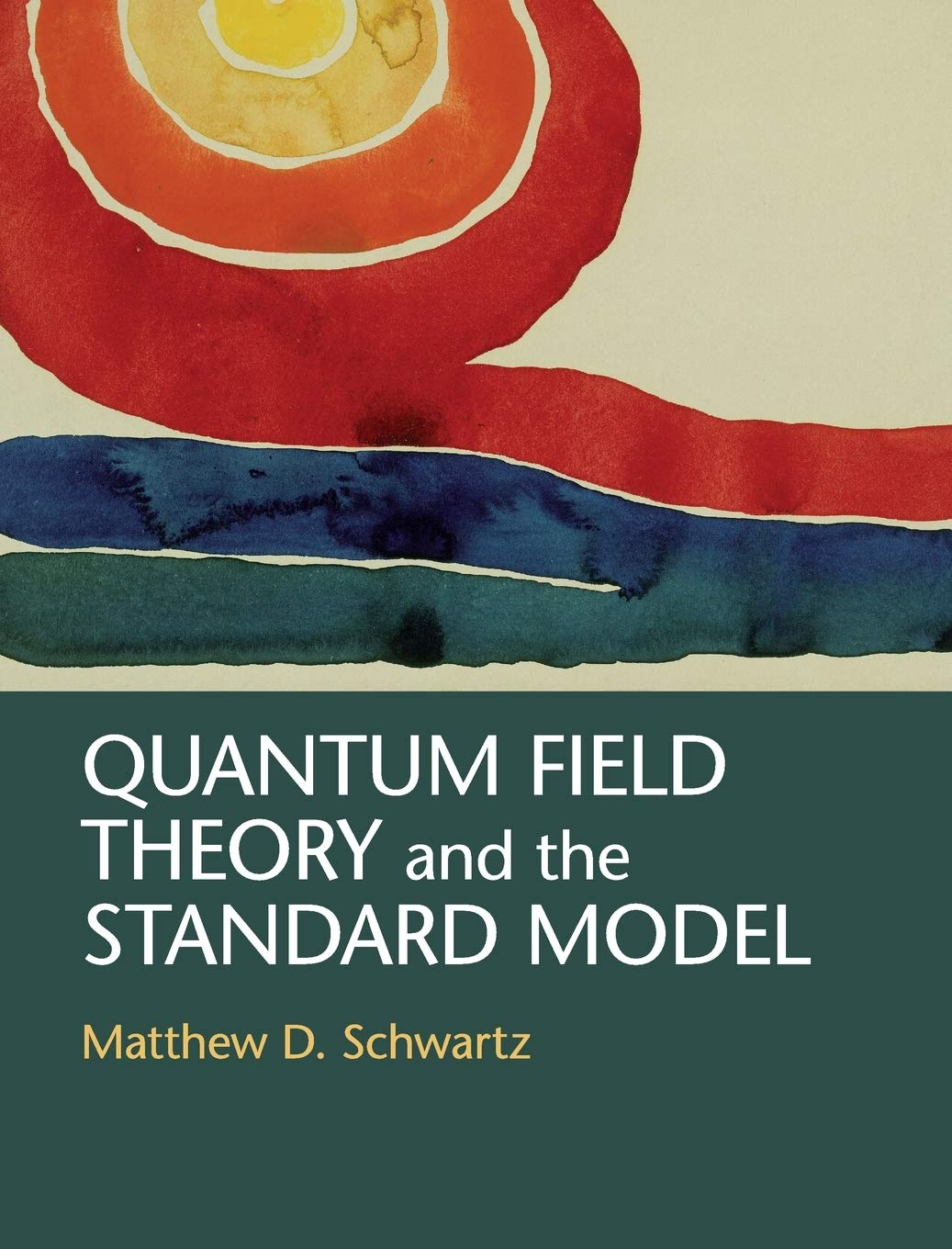
Consider this book the crown jewel in my collection of “Physics” reads. I cannot overstate its excellence in every aspect. While self-study might pose a challenge, it seamlessly complements ANY Quantum Field Theory (QFT) course, especially tailored for those eyeing a journey into High Energy Physics (HEP-Theory).
Picture this: the initial 13/14 chapters serve as a stellar foundation, constituting what I’d confidently dub as the first course. By the end of chapter 13, you’ll find yourself adept at computing scattering amplitudes for tree-level diagrams in Quantum Electrodynamics (QED). Then comes chapter 14, an ode to the brilliance of Feynman path integrals. Here, accessible techniques unfold, guiding you through the computation of time-ordered products.
Quantum field theory, often misconstrued as merely the amalgamation of special relativity and quantum mechanics, is, in reality, so much more. Its depth becomes apparent when you examine the QFT techniques seamlessly applied in condensed matter physics. Notably, these techniques find themselves in the shadows of Schwartz’s work (a book primarily tailored for the High Energy community, delving into advanced topics with meticulous detail, a rarity in other QFT books). The calculated absence of certain techniques is well-justified in the broader scope of the book’s focus.
📖 QFT for the Gifted Amateur - Lancaster & Blundell ⭐
Introductory Ideal for Beginners
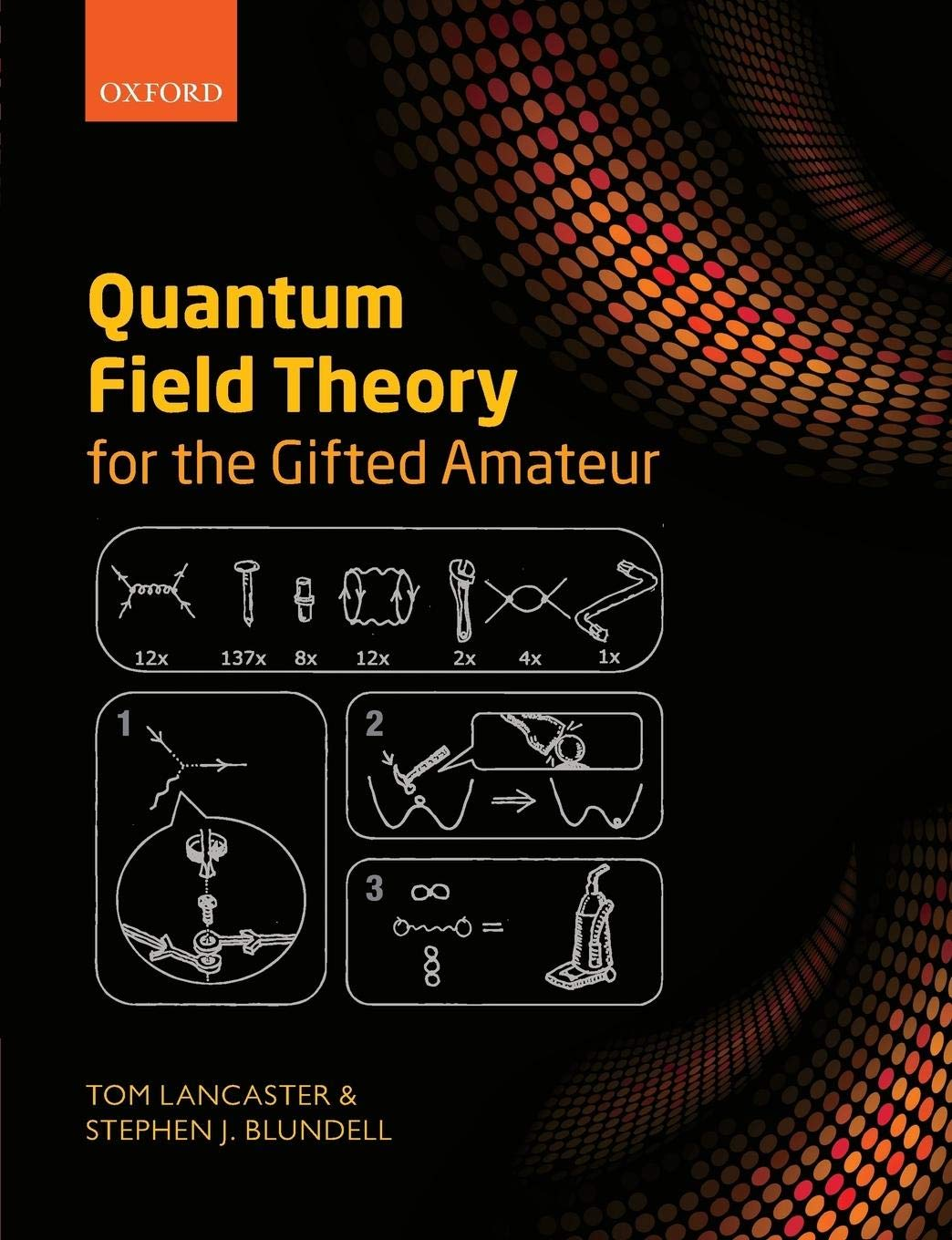
This book proudly declares itself for the “Gifted amateur,” and here, “gifted” isn’t a synonym for super-intelligent or genius – it means having not only completed theoretical physics courses but also grasped the material very well. A typical first course journey spans Chapters 1-20, followed by a skip to Chapters 34-40. The integral path approach gets its spotlight in Chapters 22-26, dependent on your professor’s flavor (note: comprehending the computations from 34-40 necessitates a solid understanding of the path integral approach).
A small caveat: Before fully embracing the intricacies of Quantum Field Theory (QFT), I was convinced that Lancaster’s QFT was the holy grail. It remains a favorite, earning a nod in the introduction to the subject textbooks. So, why did Schwartz win my heart over Lancaster? One word – simplicity. Lancaster attempts to cover all the tools and techniques needed for tackling real QFT conundrums in the initial 15 chapters, potentially leaving you feeling adrift a quarter into the book without delving into hardcore QFT computations. You risk losing the big picture. Schwartz, on the other hand, takes care of the utmost necessary stuff before plunging into QFT in the first three chapters, introducing additional tools on the go.
TIPUse both books hand in hand, with Schwartz taking the lead. Why? Because with Schwartz, you’ll reach critical QFT results much earlier, maintaining a smoother learning curve.
📍ADVANCED BOOKS
📖 An Introduction to Quantum Field Theory - Peskin, Schroeder
Advanced State-of-the-art
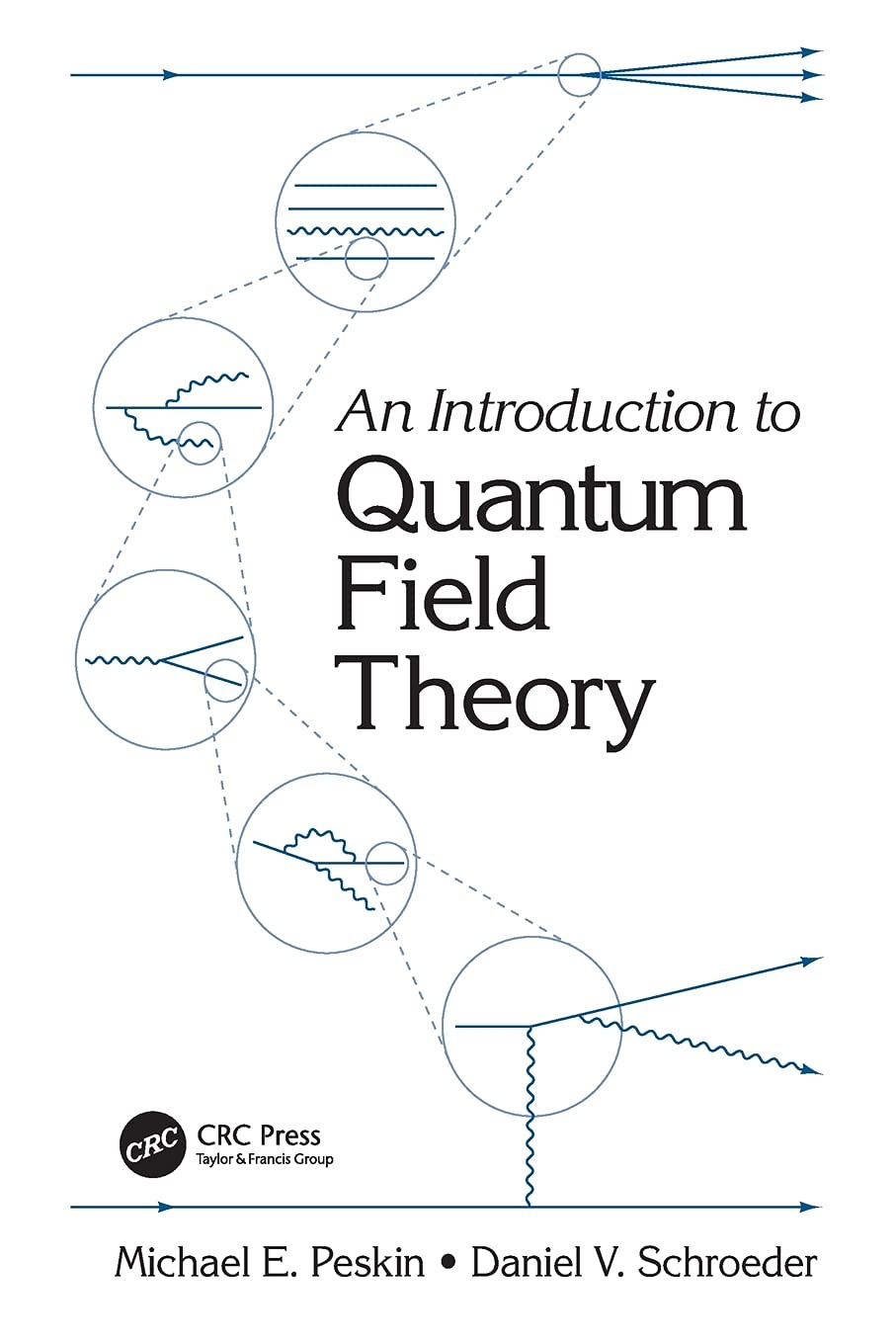
What Jackson is to Electrodynamics, Sakurai is to Quantum Mechanics, Peskin is to QFT. Simply irreplaceable.
📖 Quantum Field Theory - Mark Srednicki
Advanced
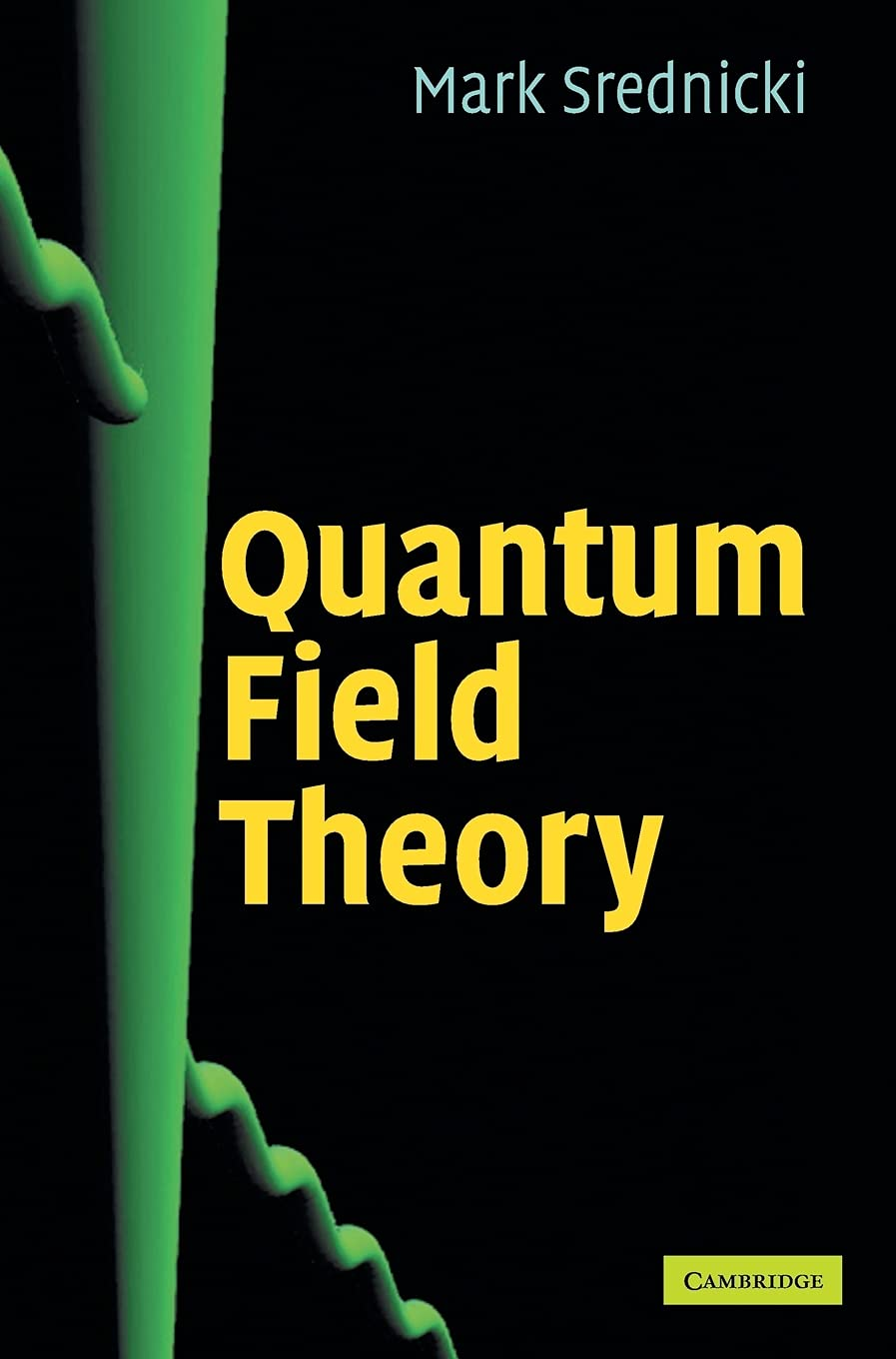
My honest take on this one is that - It is an excellent or rather exceptional book to refer if you are already familiar with QFT. Tiny chapters, he takes a rather unique approach by dividing the book content into Spin 0, Spin 1/2 and Spin 1 particles. Most results are derived to a good extent. If you ever want to know the origin to some expression, this might the book you want to pick up.
Big big big con that I find is, no illustrations at all! None, nada. Maybe I get it? It’s a reference book for a fairly advanced physics topic. But, thats not the only thing making it hostile to beginners (Schwartz also does not have a lot of illustrations now that I think about it..) The other issue is that it is a really dry read. Feels like an abstract mathematics text from Springer (For those who know, I sympathize ; For those who don’t, lucky you?).
CAUTIONHe takes the path integration approach from the beginning (so did my Prof in Heidelberg…). It was advertised to me why it is a good idea, and I fell for it. I am not sure if I prefer starting to learn QFT with path integrals or canonical quantization (For those who don’t know, these are two approaches to do QFT - both of them give us the same results). It comes from the fact that you can actually do path integrals in QM and get the same results from the Wave Mechanics business . There probably are pros and cons, I haven’t given it a lot of thought. So, I would suggest to avoid introducing yourself to the world of QFT using this one. Come back to it after one course in QFT.
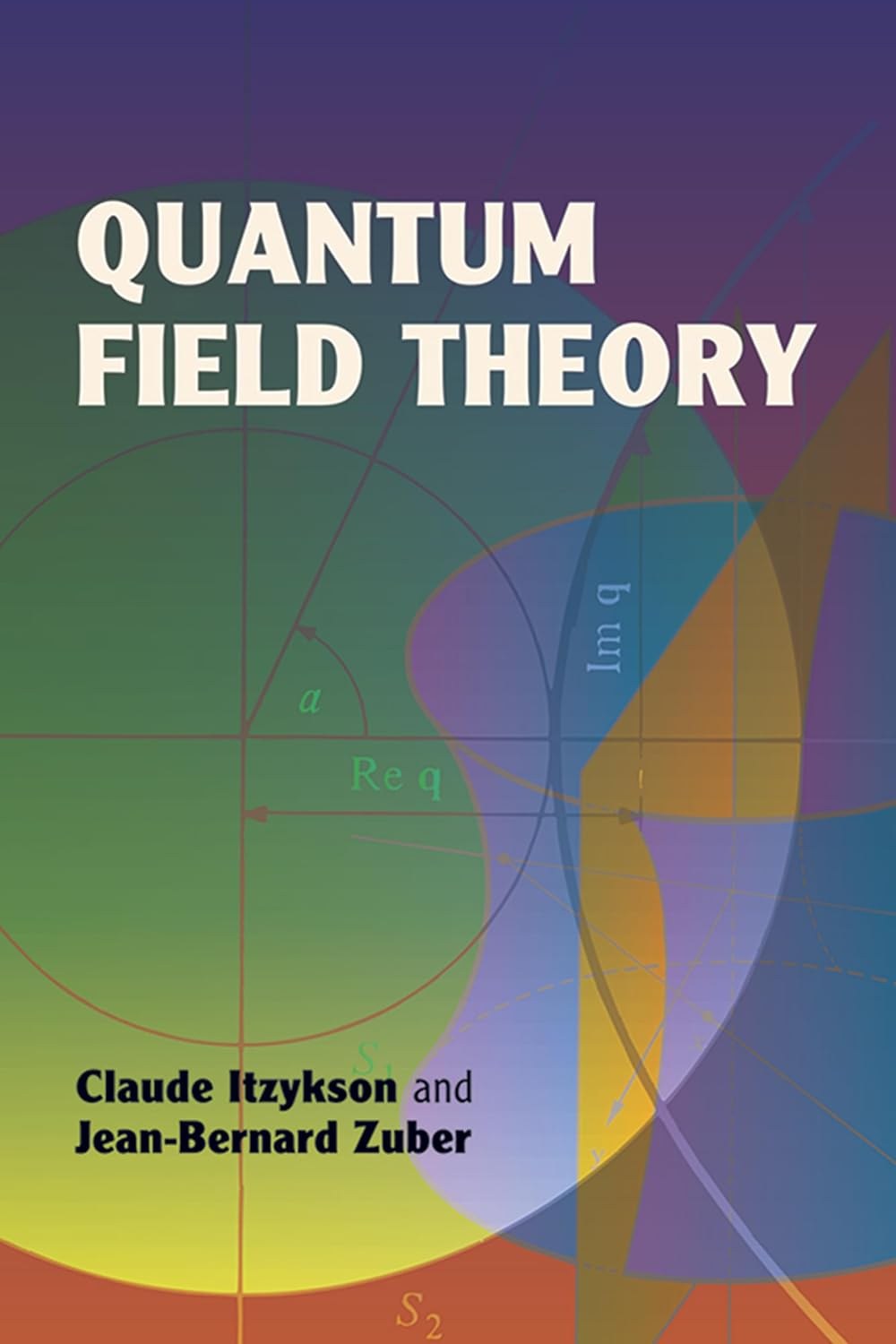
📖 Quantum Field Theory - Itzykson, Zuber
Advanced Old-is-gold
📖 Quantum theory of Fields Vol I, II, III - Weinberg
Expert Old-is-gold
📍 IDIOSYNCRATIC BOOKS
Maggoire
Intermediate
QFT Padmanabhan
Advanced Unique
QFT Kachelreiss
Advanced Unique
QFT Zee
Introductory
📍 LECTURE NOTES
📔 Daniel Baumann’s lecture notes
Introductory Ideal for Beginners Link
Like all his other lecture notes, every calculation is explicit. No beating around the bush; he gets the job done concisely yet extremely precisely. Unfortunately only adequate up to an introductory course for QFT (But self-contained for that first course)
📔 David Tong’s lecture notes (Cambridge) 🌟
Introductory Ideal for Beginners link
📔 David Morrissey’s lecture notes (UBC)
Introductory Ideal for Beginners link
📔 Arthur Hebecker’s lecture notes (Heidelberg)
Introductory link
Lecture notes for Heidelberg University - Timo Weigand
Intermediate
As Mathematically Precise as you could get in a Physics QFT course.
Lecture notes for University of Mainz - Joachim Kopp
Introductory
Based completely on Peskin as far as I can tell. Being in the introduction to QFT course, you can expect more explicit calculations.
MISCELLANEOUS
- Excellent video summarising the renormalisation of QED - It is very easy to lose sight of your goal while doing extremely lengthy calculations while renormalising parameters in theory. The video does a fantastic job of summarising everything in less than 30 minutes.